2 to 4-day Olympic National Park Itinerary: 10 Landmarks to Explore
3 days into my PNW road trip, I realized I had planned a pretty epic Olympic National Park itinerary! Though the planning was a stressful at times, that wonderful thing where everything goes smoothly happened during my road trip.
So, I want to share my entire experience, from planning to my exact 3-day Olympic National Park itinerary.
In this guide, I’ll cover:
- Important logistics to keep in mind as you plan, like the different passes/permits and summer season tips.
- Everything worth seeing in Olympic National Park and why I chose these destinations.
- My exact 3-day itinerary in Olympic National Park.
- What I would skip to make it a 2-day Olympic National Park itinerary and a more laid back 4-day itinerary.
I’ll be sharing my favorite hikes, views, waterfalls, and more based on my road trip to help you plan your Olympic adventure.
Sound good? Let’s get to it.
Jump ahead to:
Disclosure: This blog has affiliate links, and it’s how I can keep doing what I love. If you book something, I might make a commission with no added cost to you. Thanks for the support!
Why I LOVED Olympic National Park
There’s just something utterly wild about Olympic National Park. Maybe it’s the fact that you can be standing on a cliff gazing at jagged mountain peaks and glaciers, and then turn 180 degrees and see the ocean, with a rainforest in between.
I’m a total nature nerd, which is why I love learning about how a place came to be and why it’s special.
The Olympic Mountains, unlike a lot of the mountains in Washington, aren’t volcanic. They were formed by subduction – two tectonic plates collided and one slid down into the earth’s core, while the other slid up to the sky, forming the Olympics!
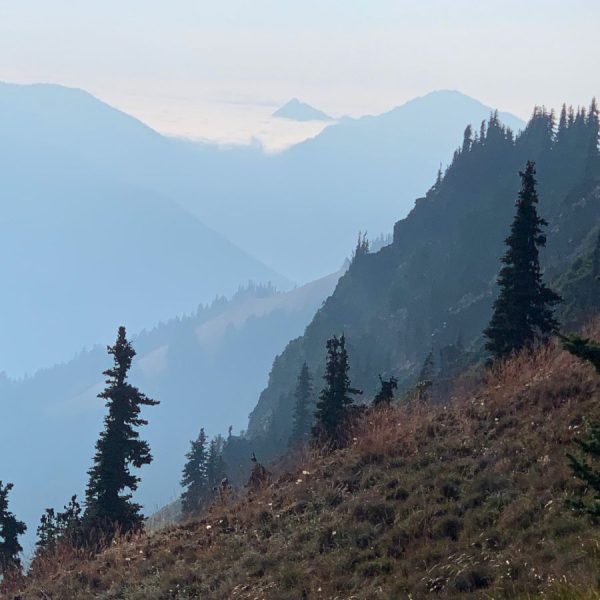
And because these mountains are so far north, they have snow year-round even though they aren’t all that tall (about 8,000 feet). It’s a rugged alpine ecosystem where the wind can reach hurricane speeds.
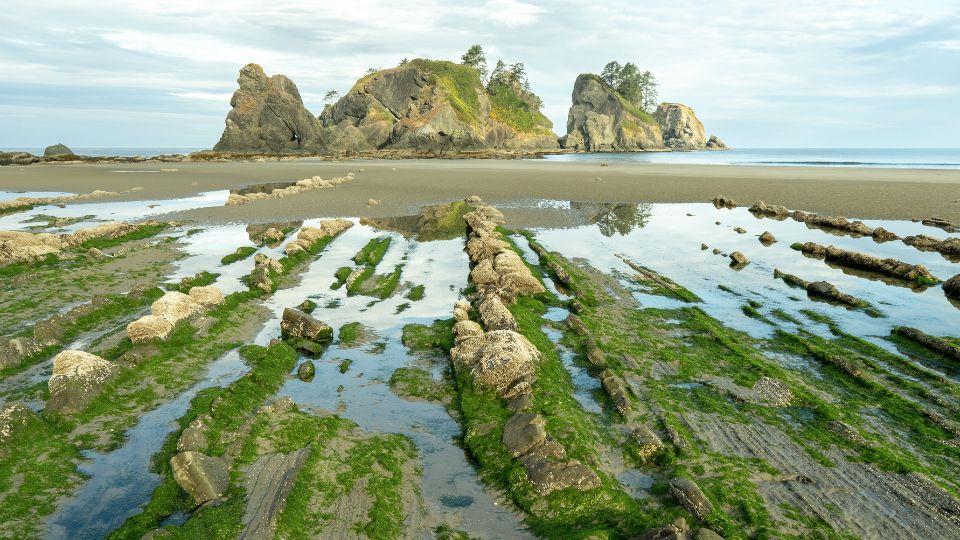
And then there’s the Washington coast, which is just as amazing as the famous Oregon Coast, but much less visited.
But the cherry on top of it all is the rain forest. As a guy who grew up close to the Amazon rain forest, I had a pre-conceived idea of what the Olympic rain forest was going to be (and I wasn’t that excited to see it).
To my surprise, the Hoh Rain Forest was beautiful and magical in a way that’s hard to describe with words and pictures!
Know Before you Go
How Much Time do you Need?
Because of the size of this wilderness and so many destinations in Olympic National Park, you need 2-4 days to see it all.
2 days will be short and you’ll have to skip a lot, and 3 days is still short but you can see almost everything if you stay busy. Meanwhile, 4 days will make for a much more relaxed road trip.
It’s hard to explore Olympic National Park in just 1 day because Port Angeles, the town that’s the main hub for everything to do with the park, is a good 2.5 hours from the Seattle airport.
You might as well take a long weekend (or even longer) to get to know the national park deeply. It makes for a great start to a road trip around all of Washington state!
The Best Time to Visit Olympic National Park
The best season to visit Olympic National Park is the summer, specifically July and August.
That being said, it’s a short season for an amazing national park, so it can get very crowded. Because of that, what I’d rather talk about is what time of the day is best!
To keep away from the crowds, get to your main destinations before 10 a.m. or after 5 p.m.
Because of the looong summer days, that actually makes for very pleasant days with active mornings, relaxed mid-days and cool afternoons.
I honestly had no issues parking anywhere because I planned to arrive at the most popular stops early in the morning or later in the afternoon.
So, for planning an itinerary, plan to explore a popular area each morning. Then, use the middle of the day to drive or explore places with lots of turnover (like the short hike to Marymere Falls). Then, explore another popular area after 5 p.m.
And my last tip: visit during the week because everything is easier and less crowded!
The Annoying Part: Permits and Passes
One of the things that stressed me out about planning my visit to Olympic National Park was all the permits and passes you need.
It wasn’t that complicated in the end, so let me lay it out real clearly for you:
- National Parks Pass: getting the annual National Park pass is a great idea for multi-day national park trip, especially if you think you’ll be visiting any other parks in the next year. It costs $80 and you get access to all the national parks for a full year (it’s easiest to get it right at the park).
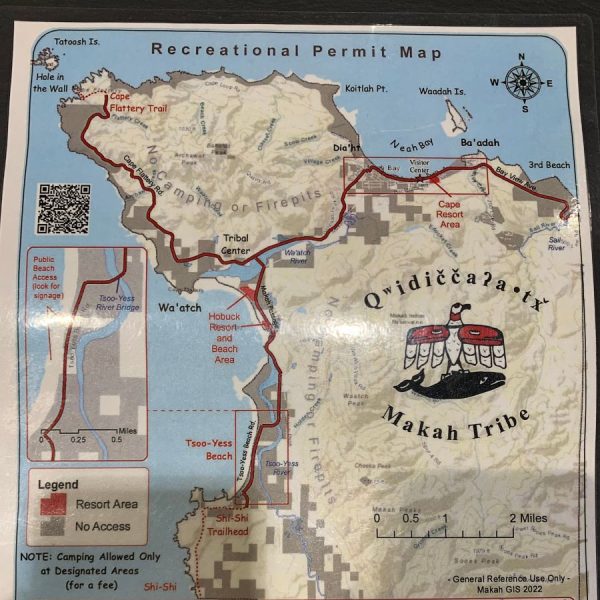
- Makah Recreation Pass: I thought this would be annoying to get, but it was super easy. I went to the Makah Cultural & Research Center Museum in Neah Bay and got it for $20. It allows you to enter Mahak recreation areas for the rest of the calendar year. If you forget to get it in Neah Bay, no worries… there’s a kiosk right by the road to Cape Flattery where you have to buy it.
- Wilderness Permits: If you want to camp on the beach, which I highly recommend, you need a wilderness permit. Getting it was actually really easy. You can find it on the Recreation.gov website and there’s hundreds of permits available, so you’re pretty much sure to get one.
But before going, I was worried about sleeping on the beach, mostly because of the tides:
Can I hike to my campsite during high tide? Low tide is at 4 a.m., so will I even be able to see anything special when I get up? Where do I even set up my tent? Is this too dangerous to try?
These questions literally kept me up at night.
Thankfully, a short conversation with a Park Ranger showed me how simple and safe camping on the beach really is.
Don’t Worry about the Tides
The tides aren’t much of a problem unless you’re going to be hiking from one beach to another.
So, for example, you can hike from one end of Shi-Shi Beach to the other – even during high tide – without any problem. What you really need the low tide for is to get across the headlands on the ends of the beach.
And some headlands are impossible to walk across.
When you get to Olympic National Park, go to the Wilderness Information Center and they’ll give you a run down on everything you need to know for your overnight stay on the beach. They print a bunch of things for you:
- Your camping permit
- A map with all points that are dangerous at high tide – there are surprisingly few (I thought they were everywhere and you were risking it all to get out on the Washington coast).
- An X marks spots that are impossible to walk across. You MUST take an overland route (not the beach).
- A red circle means you can walk across the headland, but only during low tide. Even then, the tide might catch you unawares, so consider going over land.
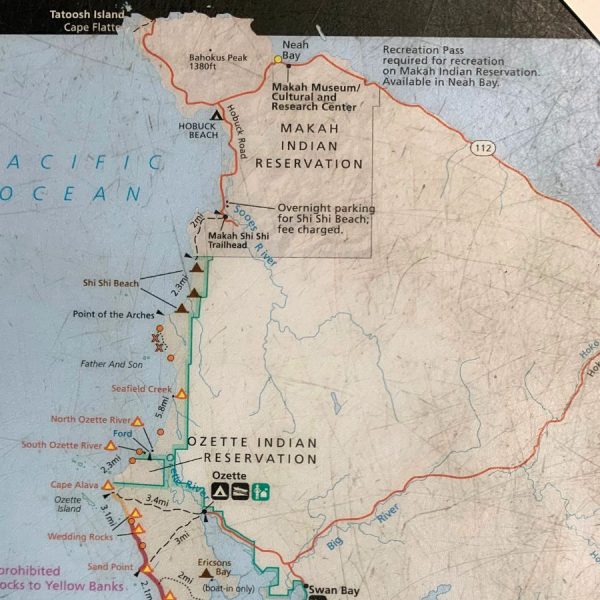
- The tide chart for the next few days with all the high and low tide times for each day (there are 4 every day). You can also check the tides yourself online.
- You can also get maps of the areas you’ll be exploring
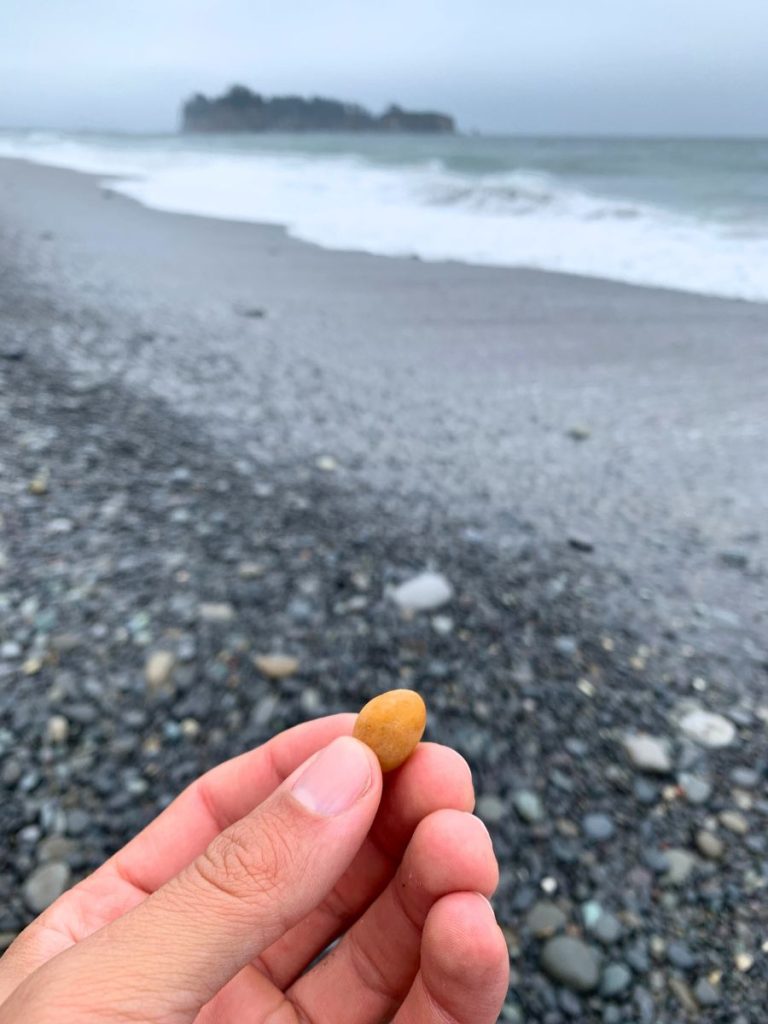
In my itinerary, I wasn’t going to cross any headlands, so I realized I didn’t even have to worry about dangerous tides. And since I’d only be spending one night on the beach, I just got there when I got there, slept in and had an absolutely wonderful experience (more on that later).
Where to get Groceries
If you’ll be cooking your own meals, like I did, the best place to get your groceries is the Walmart near Port Angeles. It’s huge!
Beyond Port Angeles, you’ll only find small, expensive stores with a poor selection. So, stock up on most of your groceries at Walmart and then buy other stuff as needed on the road. Doing this will help keep the trip cheaper too.
Where to Stay for your Olympic National Park Itinerary
If you’ve read my blog, you know I’m all about free car camping. But around Olympic National Park, I actually paid for my camping for a change.
The park has great camping options, as well as towns with good hotels all around the park.
These are the best areas to stay for any Olympic National Park itinerary:
- Port Angeles: lots of hotels and campgrounds
- North Coast: a few hotels, lots of campgrounds, and beach camping
- Forks: several hotels and campgrounds
I’ll give you options for campgrounds and hotels in the itineraries below because I know not everyone loves camping.
Where to Stay in Port Angeles
These are the best places to stay near Port Angeles on your trip to Olympic National Park:
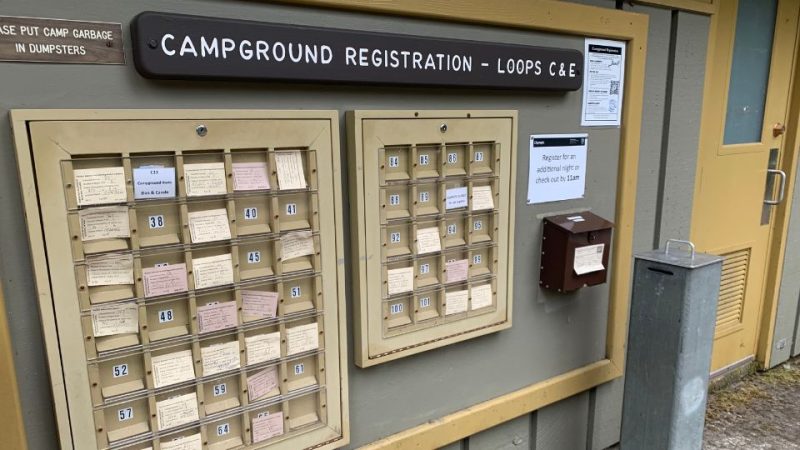
- Camping: the best campground in Port Angeles is Heart O’ the Hills Campground because it’s usually the last campground to fill up in the park. It’s first-come, first-served, so it’s likely you’ll find a spot for $24 if you arrive in the afternoon. Plus, it’s halfway between Port Angeles and Hurricane Ridge (one of the Olympics’ most popular areas), so you’re conveniently positioned to visit it. That being said, it may be full – so it’s good to have a backup plan.
- Hotel in Port Angeles: Port Angeles has everything from low-cost motels to extravagant cottages, but I think the best mid-range option right by the water is The NW Olympic Retreat.
Where to Stay on the North Coast
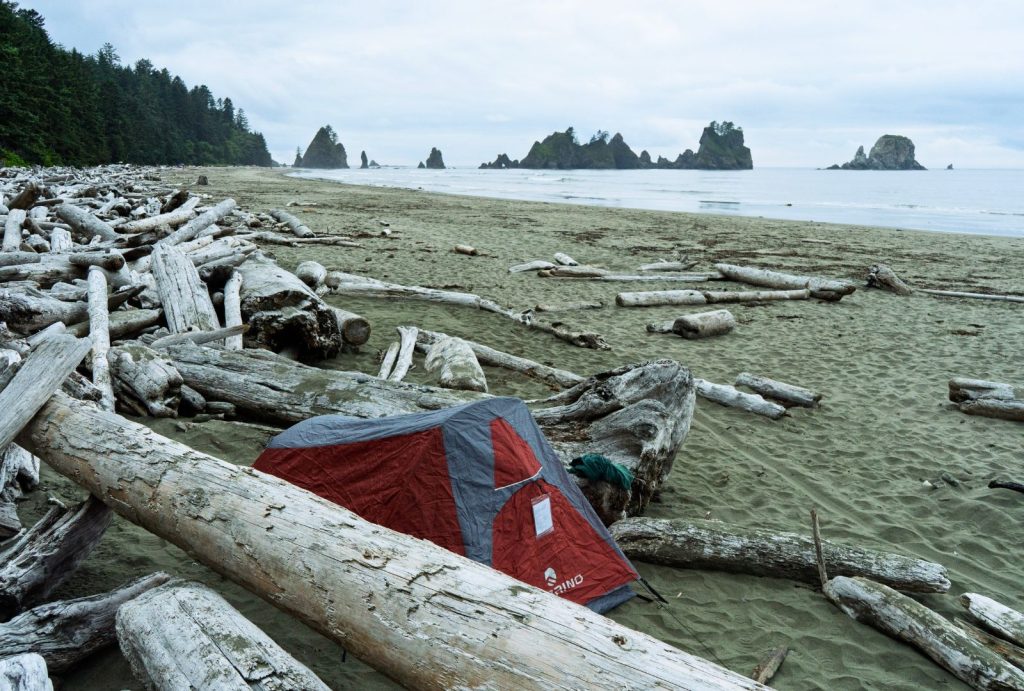
- Camping: this is where I seriously recommend camping on the beach. It’s a long hike (5 miles) to the astounding Point of Arches, but camping at Shi-Shi Beach is a surreal experience. Just go to this Recreation.gov page, choose North Coast and enter the dates you’ll be staying. The permit costs $14. If you’d rather stay at an established campground, go to Ozette Campground, which is first-come, first-served and costs $20 a night.
- Hotels on the North Coast: there are pretty good hotels close to Neah Bay and all the destinations on the Northwestern Coast of the Olympic Peninsula. The highest rated budget stay is the Waterfront Sekiu Escape, while the highest rated mid-range hotel is 45 minutes from Cape Flattery.
Where to Stay in Forks (and on the drive south)
- Camping: if you didn’t camp on the beach before, you can do it on the South Coast. Second Beach isn’t as epic as Shi-Shi Beach, but it’s still a rugged Washington beach – and the hike there is MUCH shorter. Follow the same instructions for Shi-Shi Beach but choose the option South Coast. For a paid campground, your options are the Hoh Rainforest Campground (reserve way in advance for $24 a night) or Kalaloch Campground and South Beach.
- Hotels: Forks has lots of good hotels at great prices and whole bunch of rentals. But if you’d rather be closer to an awesome destination, I would suggest one of 3 better options: 1) stay at the Quileute Oceanside Resort in the town where Twilight was filmed (and right next to Rialto, Second and Third Beach). 2) Stay at the Hoh Valley Cabins, just minutes away from the Hoh Rain Forest. 3) Stay at the Lake Quinault Lodge by Lake Quinault and the World’s Largest Sitka Spruce.
To see all your options, check out the map below. It’s zoomed into Port Angeles, but you can zoom out to see all the hotel options around Olympic National Park.
map code:Must-see Stops during my Olympic National Park Itinerary
Everything’s starting to come together – put what are best places to see in Olympic National Park? Where is this road trip across the Olympic Peninsula taking us?
When I was planning, I put in the manual labor to find where I wanted to go and just looked at photos on Google Maps.
I literally zoomed into the road around Olympic National Park and clicked on pretty much everything on the map to see pictures… if a destination looked epic, I wanted to be there.
At the end, I cross-referenced with other blogs to see if I missed any awesome place.
My goal was to see amazing things, so I guided myself by the best, most epic pictures.
In order not to clutter the 2, 3 and 4-day itineraries, I’m going to go over each one of the destinations I chose to explore in Olympic National Park first and what I thought after actually being there.
These destinations in Olympic National Park are in order, driving from Port Angeles west and then south along the coast.
Important note: I’m all about nature, so this itinerary is all about the national park, and not at all about what to do in the towns around it.
Olympic National Park Itinerary MAP
I created a custom Google Map of my Olympic National Park itinerary with all the hikes, viewpoints, and accommodations in this post.
This interactive map is perfect for visualizing your trip around the Olympics. Whether you’re hiking into the mountains, camping on a beautiful beach or navigating to different waterfalls, it’s all pinned and ready.
👉 Open the full map in Google Maps or see it embedded below. Tap the icon on the top left of the map to see the whole menu.
Stop 1: Hurricane Ridge and Heart O’ The Hills
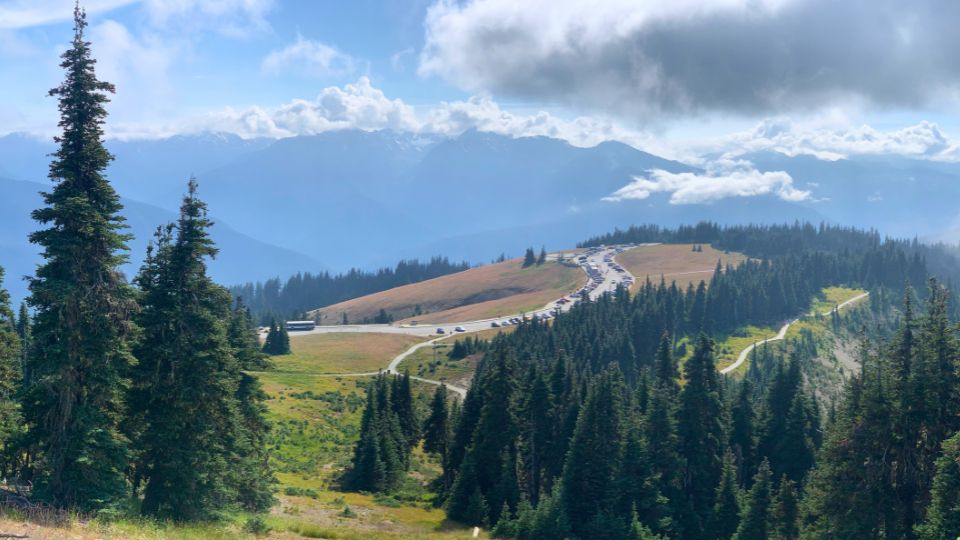
Just south of Port Angeles is the most easily accessible view of mountains and glaciers in Olympic National Park – Hurricane Ridge.
And it’s little brother, Heart O’ The Hills, is just 25 minutes down the mountain.
I wanted to get to know both areas in my hunger to get to know everything I possibly could. As it turns out, Heart O’ The Hills might not be worth your valuable time.
Hurricane Ridge
Named after the hurricane-speed winds that can ravage the alpine landscape up here at 5,200 feet above sea level, this place has some of the best views in all of Olympic National Park.
And it begins as soon as you get to the parking lot.
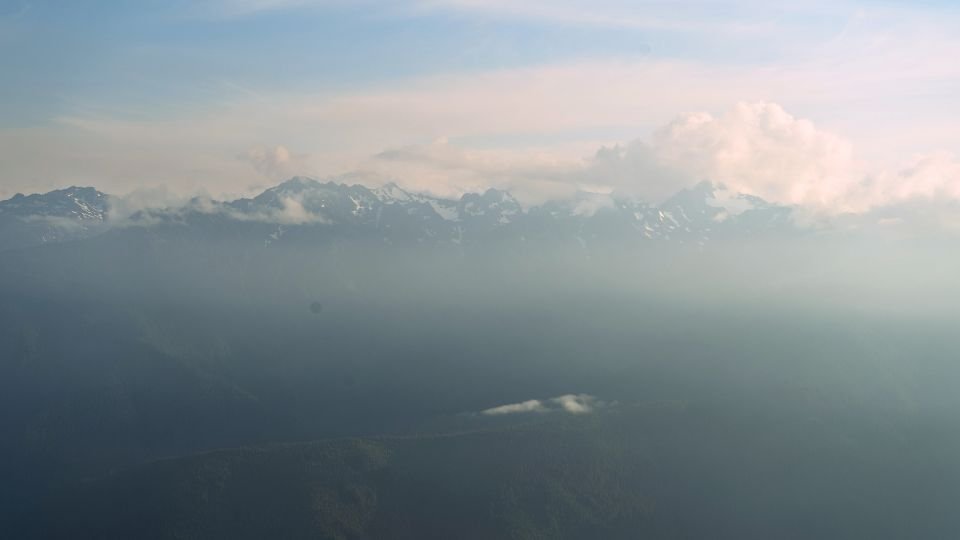
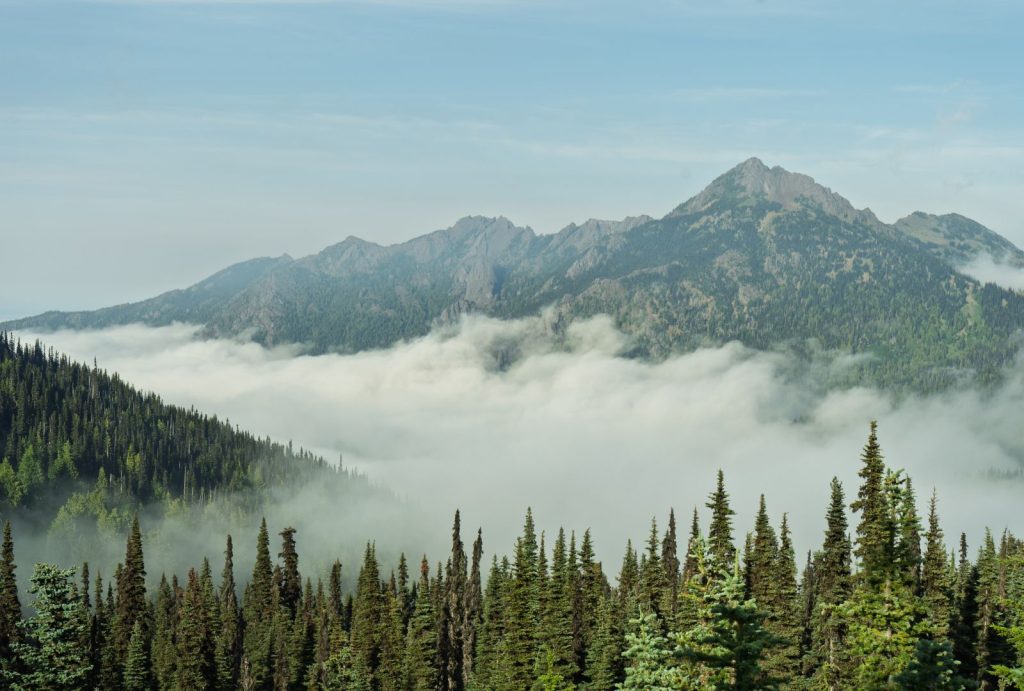
You round a corner and all of hurricane ridge appears before you, lined up in all its glory. The jagged mountain peaks that keep some snow all the way into August are gorgeous in the distance. But what is there to do here?
Well, the view is just as good everywhere – even the parking lot. You could stay there and have a picnic. But where’s the fun in that? Plus, getting higher to where you can see the ocean to the north is a spectacle.
I wanted to do two hikes in Hurricane Ridge:
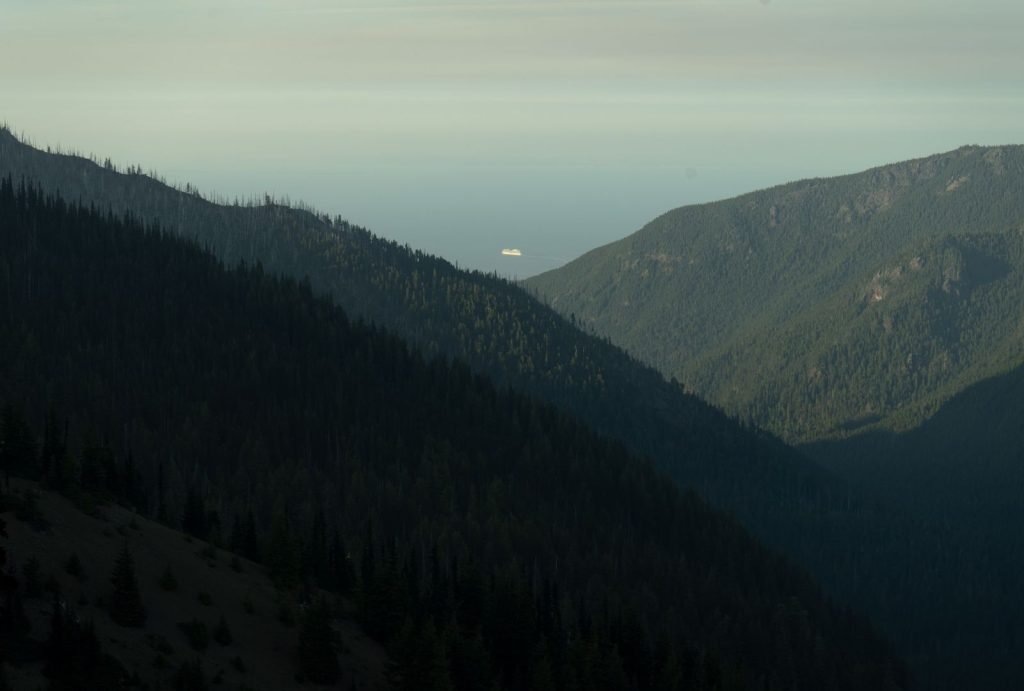
- Hurricane Hill: This is a 3.2-mile paved trail with 700 feet of elevation gain. It’s the most famous hike in the area, with good reason. You get views of hurricane ridge the entire time. Then, at the top of the hill, you see mountains receding into the ocean, although when I saw them they were in a sea of clouds. I actually preferred the view north (opposite of hurricane ridge).
- Cirque Rim: The other hike I wanted to do was the Meadows Trail, but I ended up doing the Cirque Rim, which was way better. You get to see all the good views with much less exertion. It’s a short loop that starts on one side of the parking lot, heads up the meadow to get the view towards the ocean and then circles back to the other side of the parking lot. It’s absolutely epic!
Heart O’ The Hills
Now, I went to Heart O’ The Hills for two reasons: my campsite was there and I wanted to do the Lake Angeles Trail.
The campsite was great, and it’s the best place to stay when exploring the area, but the hike was a little disappointing.
See, I had seen photos of Lake Angeles, and its gorgeous. I also wanted a tougher hike (2,000 feet of elevation gain) to start out my second day in Olympic National Park. I will say, the lake was absolutely gorgeous.
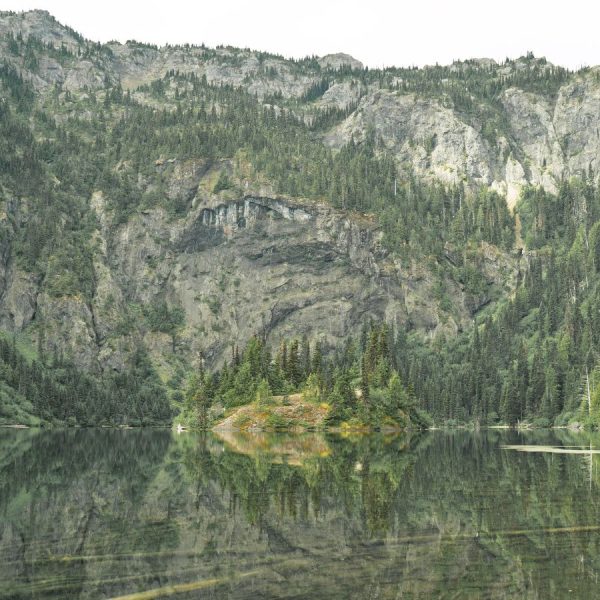
But 1) the hike itself was a boring trek through 3.6 miles of woods both ways and 2) I did NOT need a tough hike that day – it was way too tiring for this itinerary.
I just don’t love hikes through the woods, where everything is pretty much always the same. I much prefer hikes into the alpine, like the hikes I did at Mount Rainier National Park, where your mind is blown every time you look up!
Now you know… Lake Angeles may not be worth putting into an already crammed Olympic National Park itinerary, but at least it is beautiful.
Stop 2: Marymere Falls and Sol Duc Falls
Marymere Falls and Sol Duc Falls are arguably the two most popular waterfalls in Olympic National Park. It’s probably because the hikes to the waterfalls are nice and short.
With that in mind, they can get crowded. Parking can be a nightmare.
Here’s a little bit about the hikes and my experience there:
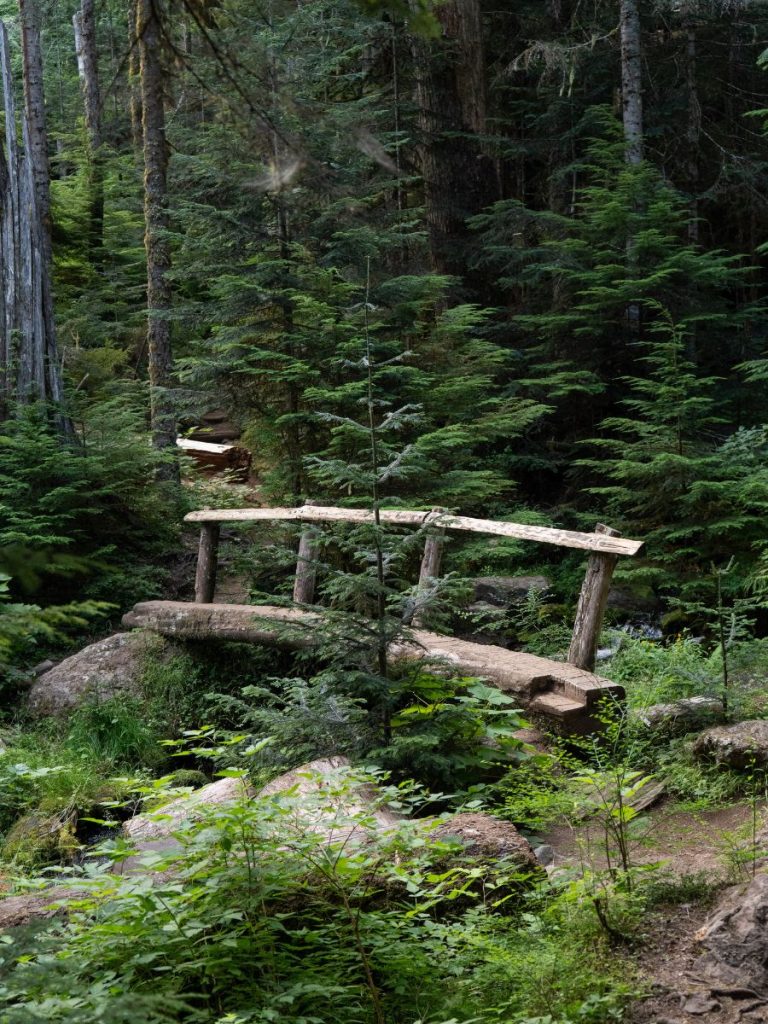
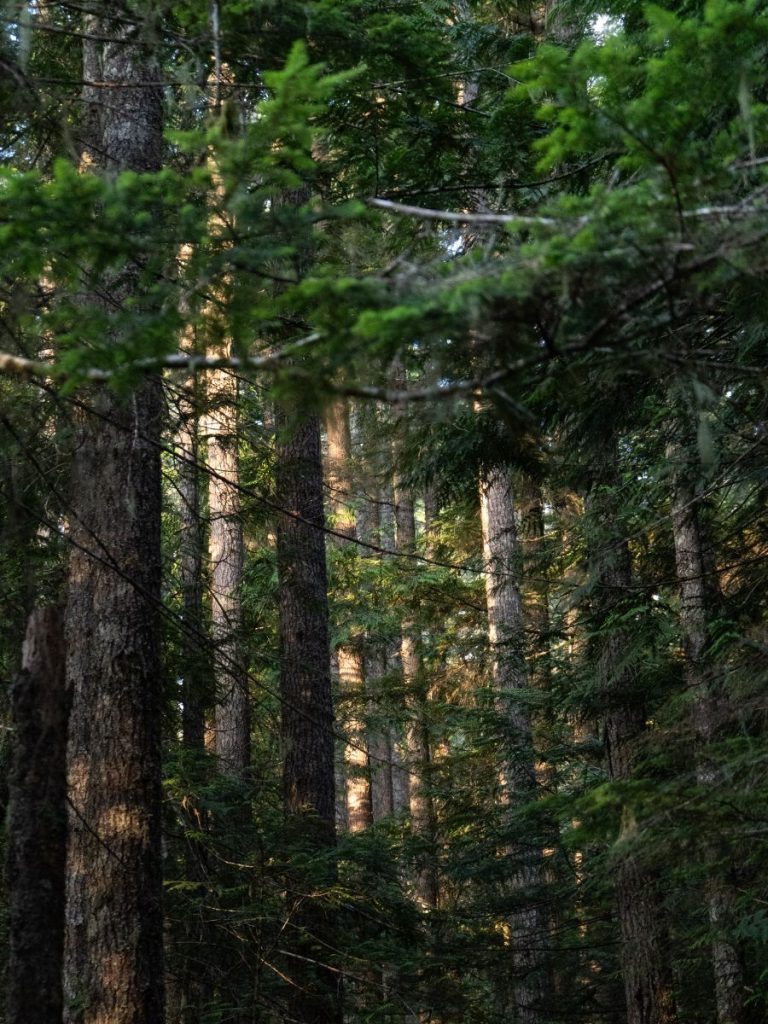
- Marymere Falls: I was able to park soon after I arrived by parking on the side of the road towards the boat launch. The 1.8-mile hike was gorgeous. Huge, moss-covered trees tower over everything and then… the waterfall isn’t really that amazing. What makes it worth it is the hike there and how easy it is!
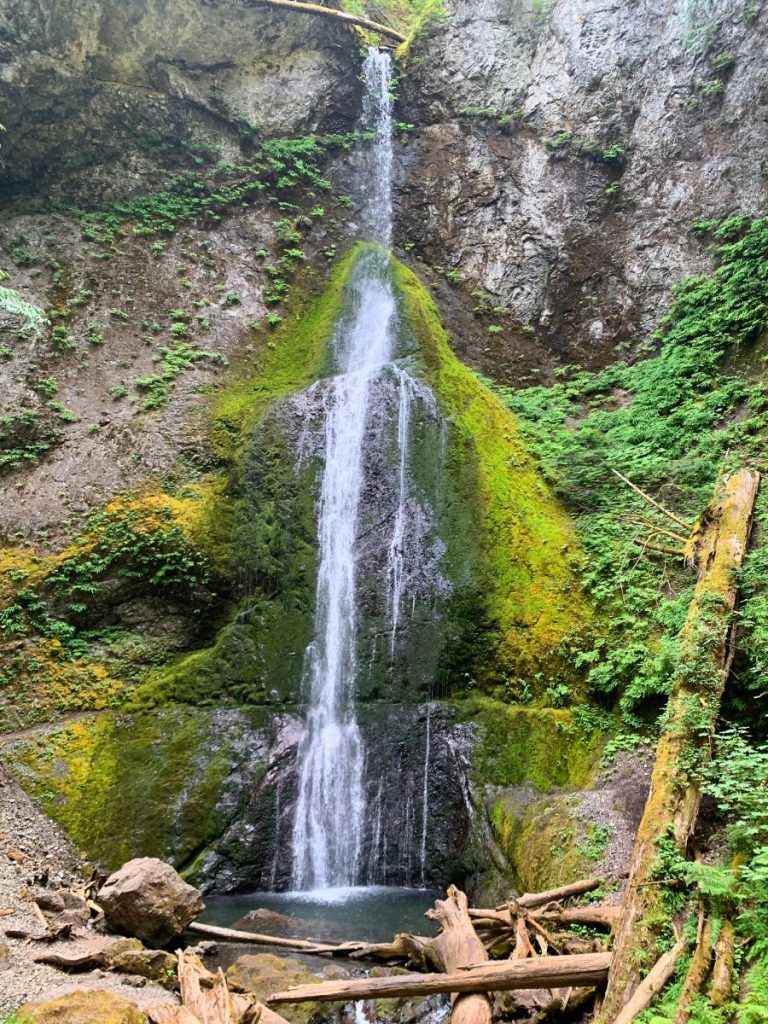
- Sol Duc Falls: This waterfall is a bit further from the highway, but it’s also 1.8 miles long roundtrip. The hike takes you through a gorgeous old-growth forest and ends at a big waterfall with 3 distinct sections. This hike may be more worth your time. However, I didn’t actually visit Sol Duc Falls! Even though it was in my plans, I was too tired, so I had to skip something… it ended up being Sol Duc Falls.
Stop 3: Cape Flattery
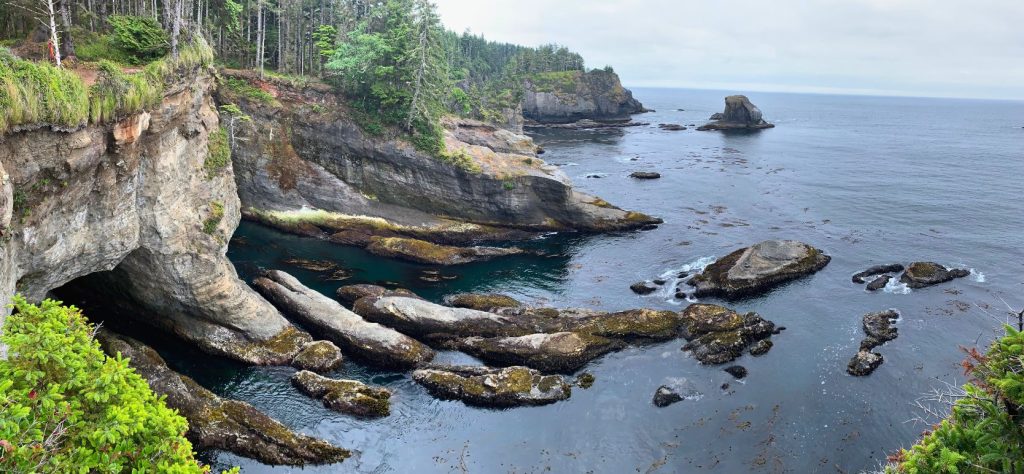
Cape Flattery is the northwestern-most place in all the continental USA (not counting Alaska). It’s also the first experience of the rugged Washington Coast on this Olympic National Park Itinerary and possibly the most gorgeous of them all!
To get there, drive west to Sappho and then turn right on US Highway 113/112. All you need is the Makah Recreation Pass, which you can get online, at several stores in Neah Bay and at a kiosk on the road as you get to Cape Flattery.
Pro Travel Tip: make sure you download an offline map of the area on Google Maps before your road trip in case you lose signal!
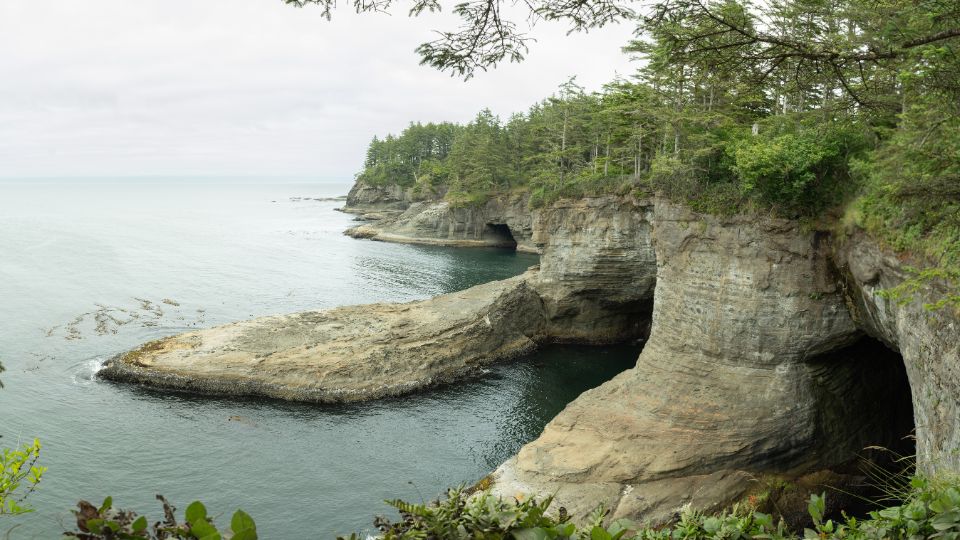
The hike is only 1.5 miles roundtrip and it starts out through the forest. But you start seeing incredible views through the trees pretty soon, and then the epicness is all around you.
Viewpoints right and left make the hike seem long because there’s just so much to see, and it all ends at the main viewpoint where you can see the Cape Flattery lighthouse.
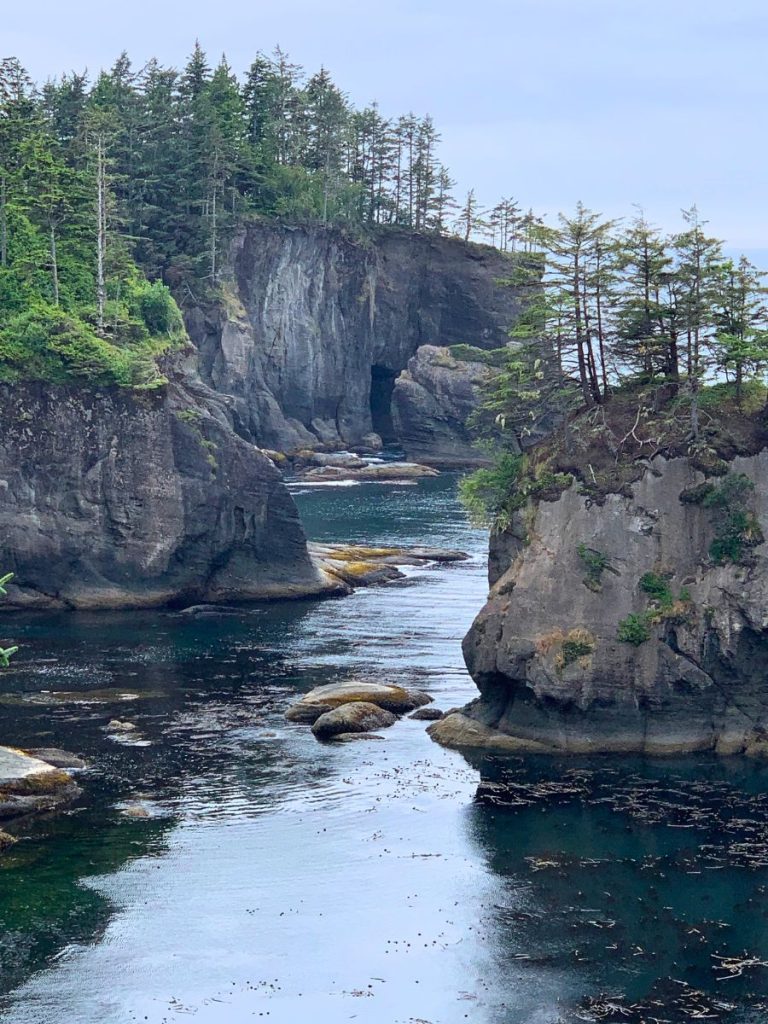
But my favorite view was from the first big viewpoint on the left.
It’s hard to describe just how ruggedly beautiful and magical this place is, which its sheer cliffs and crystalline water. So, I’ll let the pictures do the talking.
Stop 4: Shi Shi Beach
I have a love-hate relationship with Shi Shi Beach.
You know how I said I was too tired after the Lake Angeles Trail? Well, that was the start of my day, and I finished that same day hiking 5 miles to Point of Arches on Shi Shi Beach.
It was a grind.
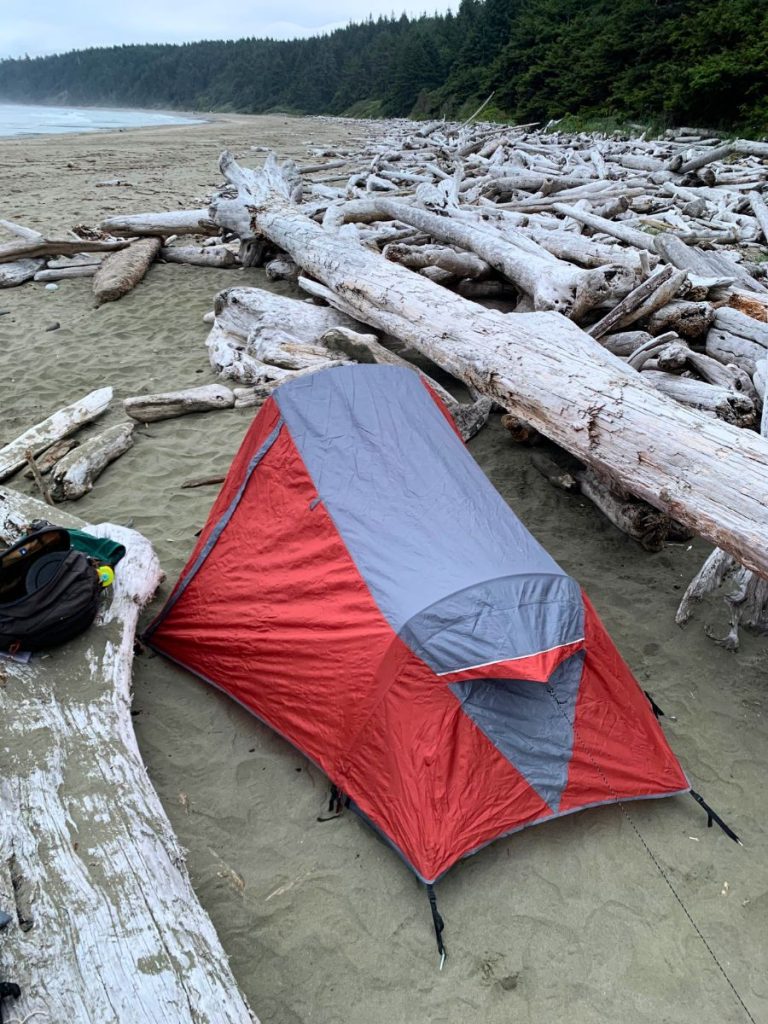
That being said, camping on Shi Shi Beach was one of the highlights of my entire PNW road trip!
Planning my night on Shi Shi Beach was a little stressful, but it didn’t have to be. Here’s a quick rundown of the process so that you can plan easily:
- Book the night (or nights) you want to camp there on this Recreation.gov page. Choose North Coast and enter the dates you’ll be staying. It costs $14.
- When you get to Port Angeles, stop by the Wilderness Information Center in the Visitor Center. They’ll give you a TON of information, print out your permit and give you a free bear box.
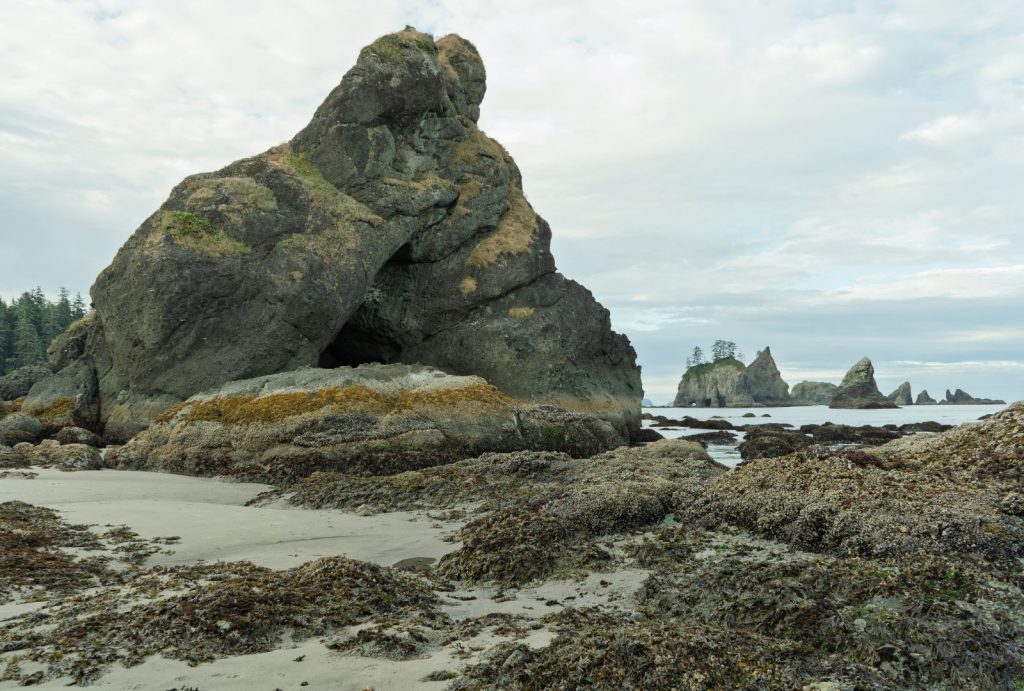
- Once at Shi Shi Beach, park at the designated spot (it’s marked in the map above) and hike to the beach. Then, hike to the far end of the beach, which is Point of Arches – the main destination. Finally, set up your tent as far from the water as you can.
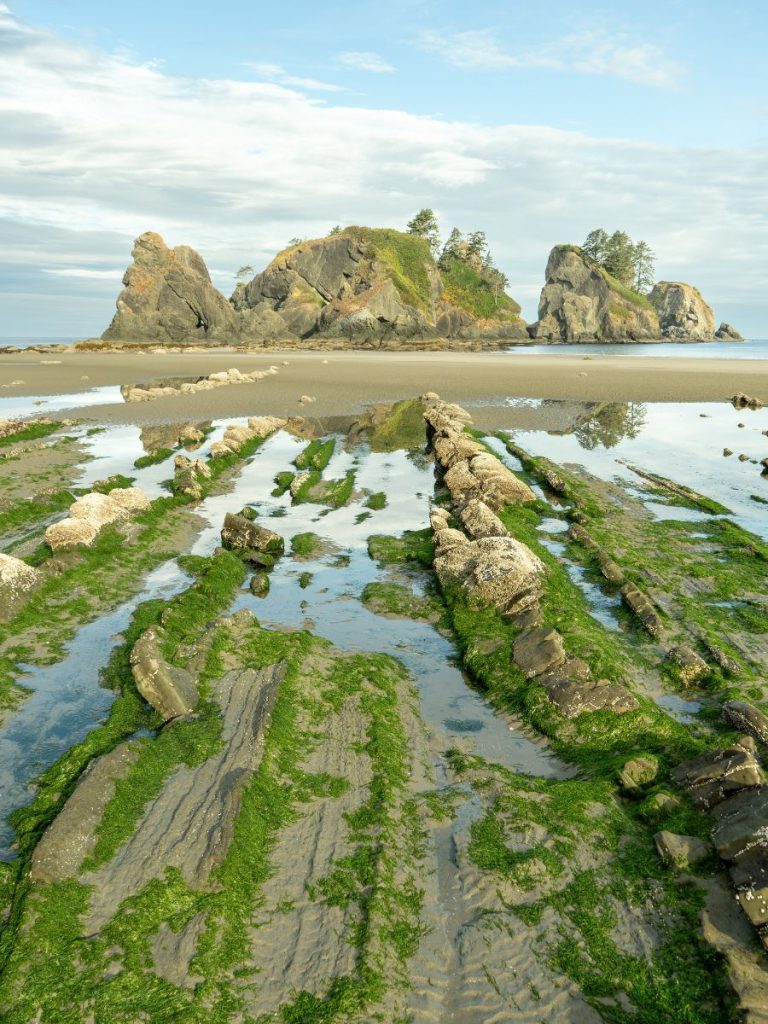
- Walk to Point of Arches during low tide and enjoy. It’s an absolutely crazy place!
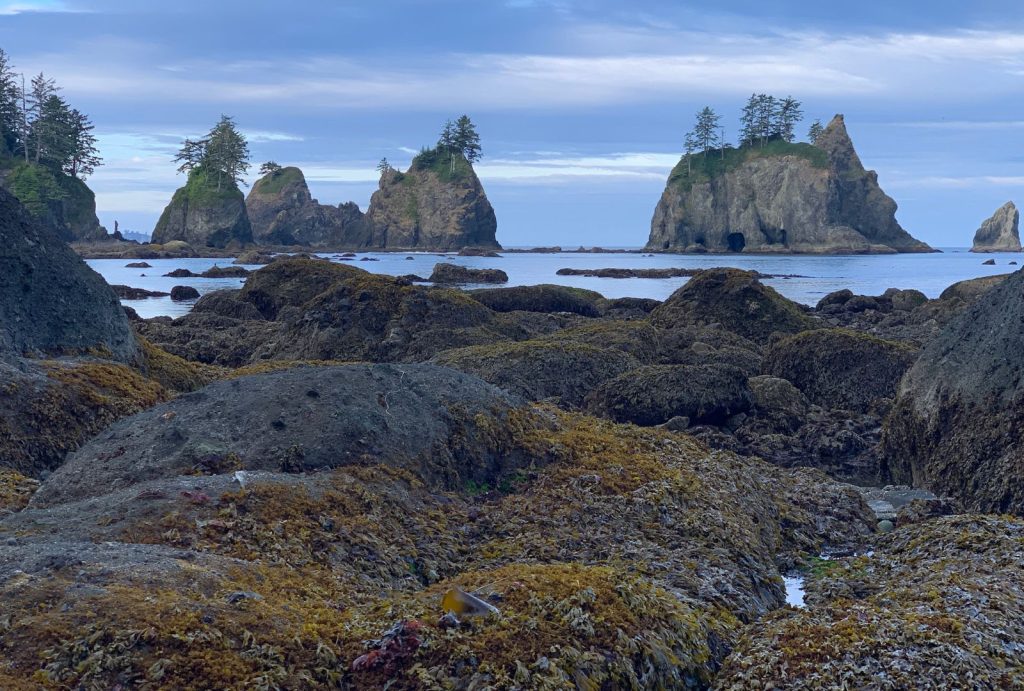
Most sites online call this an 8.8-mile hike, and it is from the trailhead. But the parking for overnight camping is farther, which makes it about 10 miles long.
This is the general gist of sleeping on Shi Shi Beach. For a full breakdown of everything, read my detailed guide to camping on Shi Shi Beach here!
Stop 5: 4 Washington Coast Beaches
“Stop 5” is actually 4 different stops, but I thought I’d put them all together. I chose to visit these beaches by clicking on ALL the beaches on Google Maps and looking at the pictures.
The first three beaches on this list are close to La Push, where parts of Twilight were filmed. I didn’t know that until I went, but it’s apparently a big reason why a lot of people visit this area.
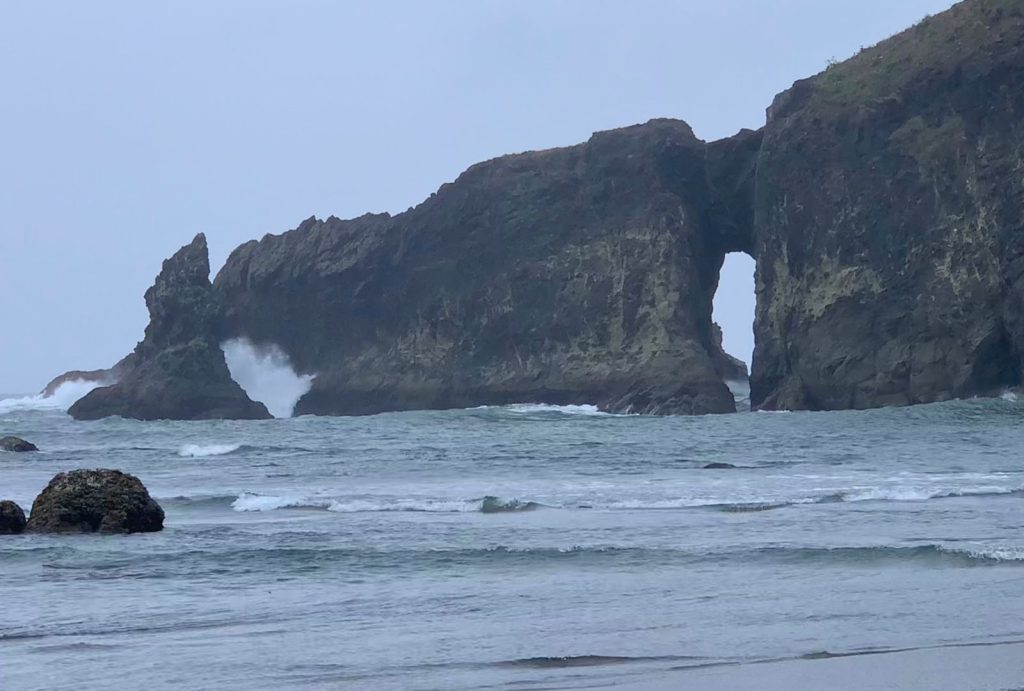
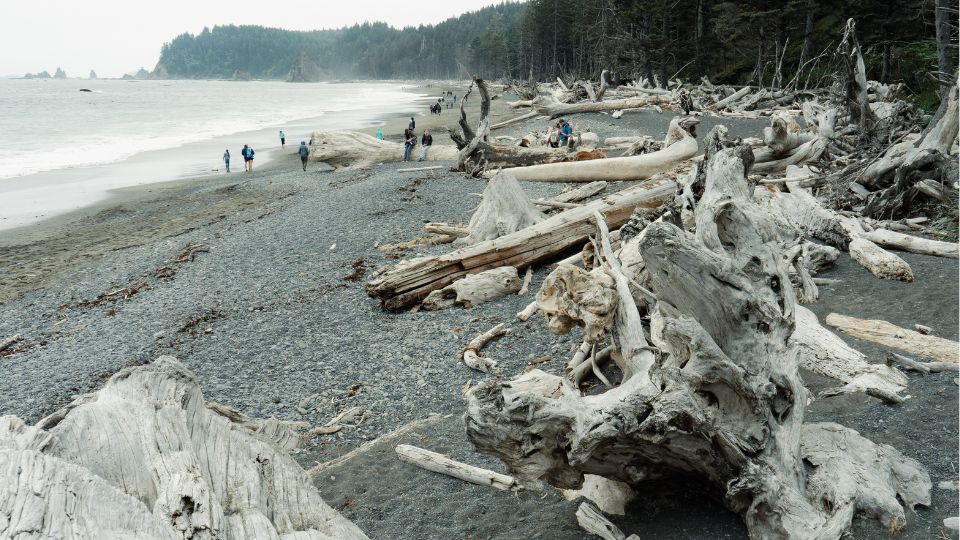
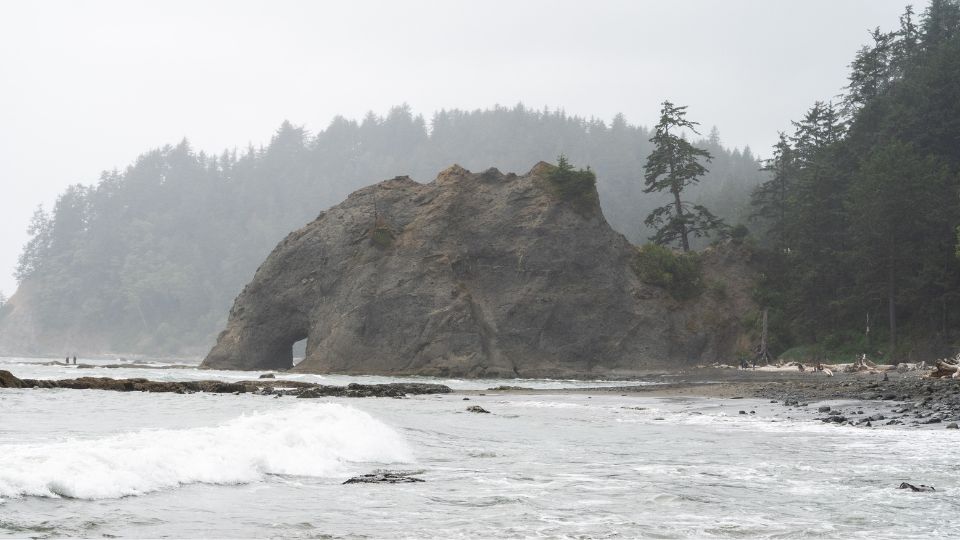
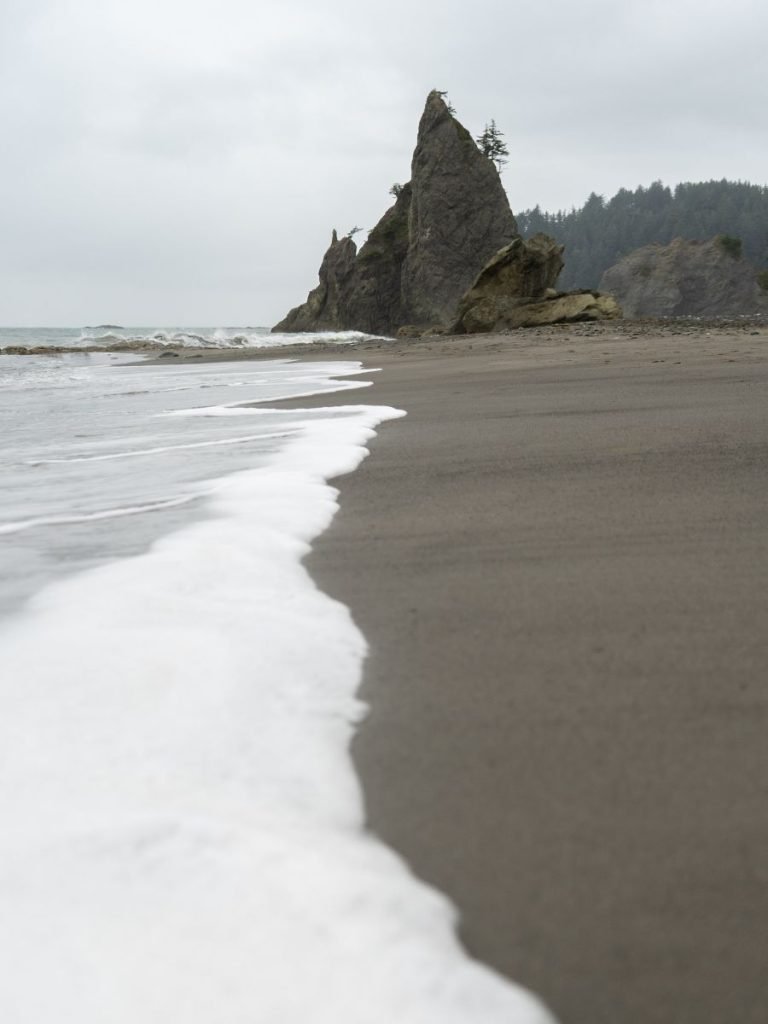
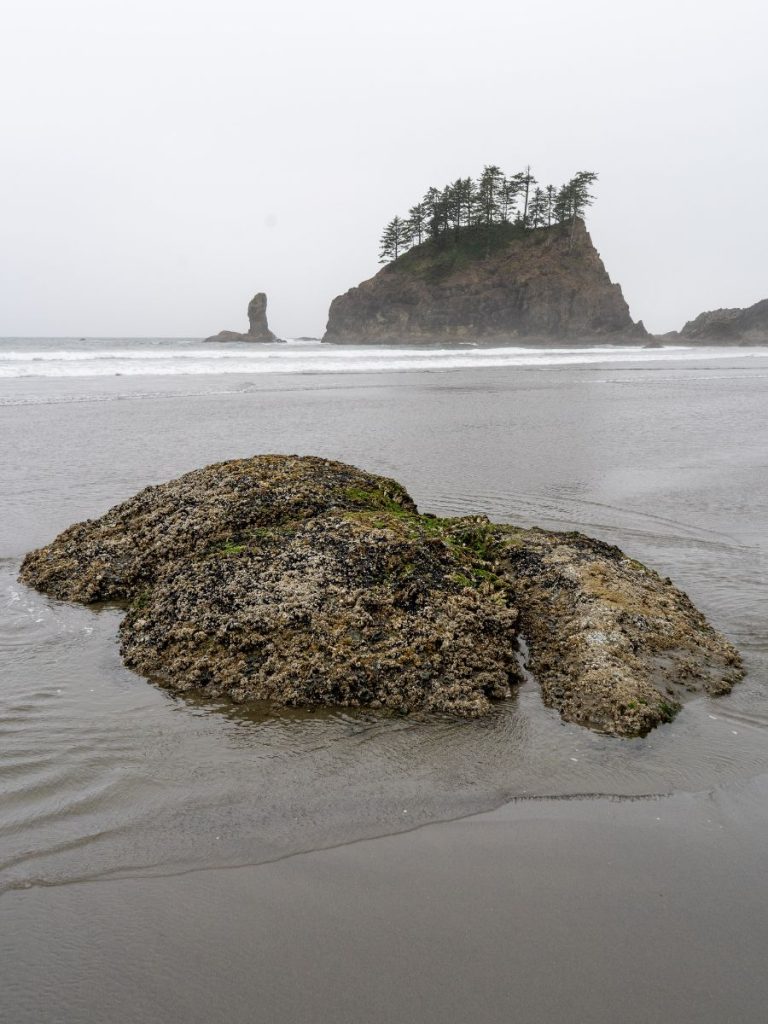
- Rialto Beach: This was my favorite of these 4 beaches. You can walk towards an epic feature called Hole in the Wall, but my favorite was closer: a jagged spike coming out of the water. The walk to Hole in the Wall is 3.3 miles roundtrip, and you can actually walk through the hole during low tide. This rocky beach is gorgeous.
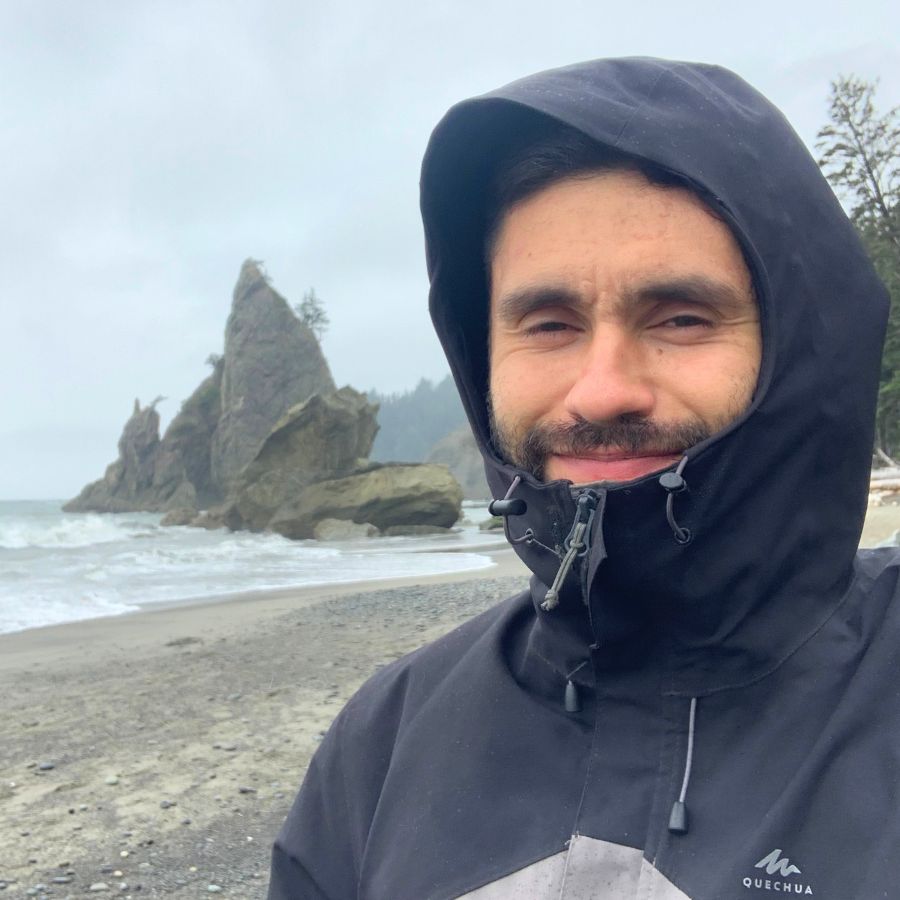
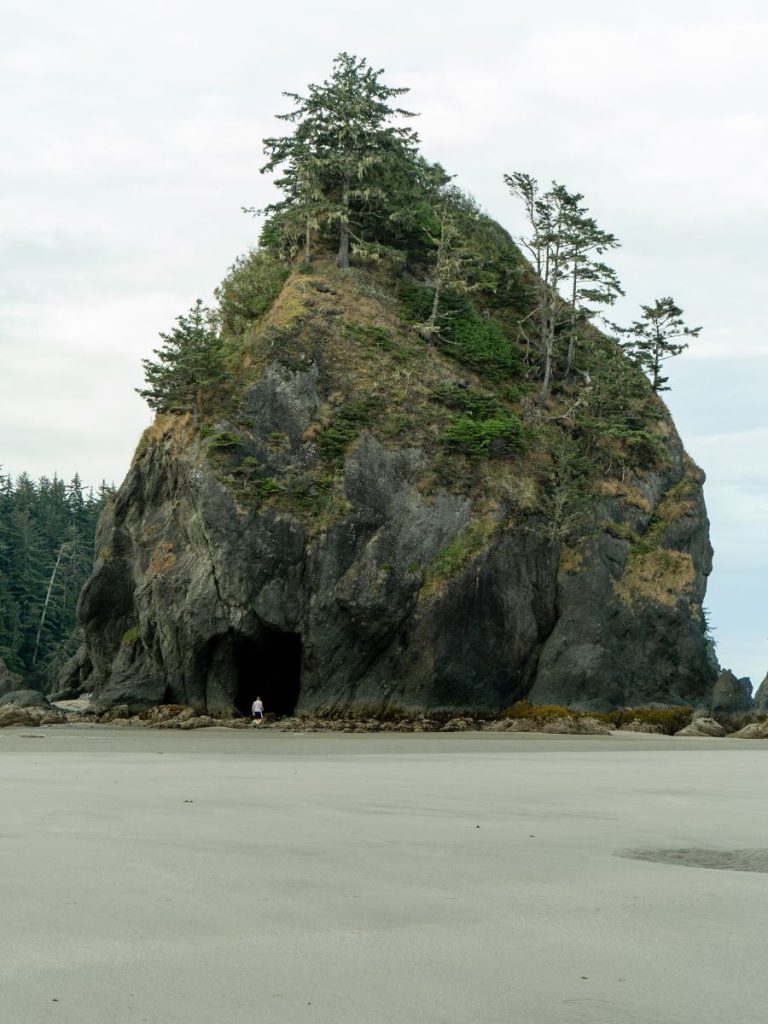
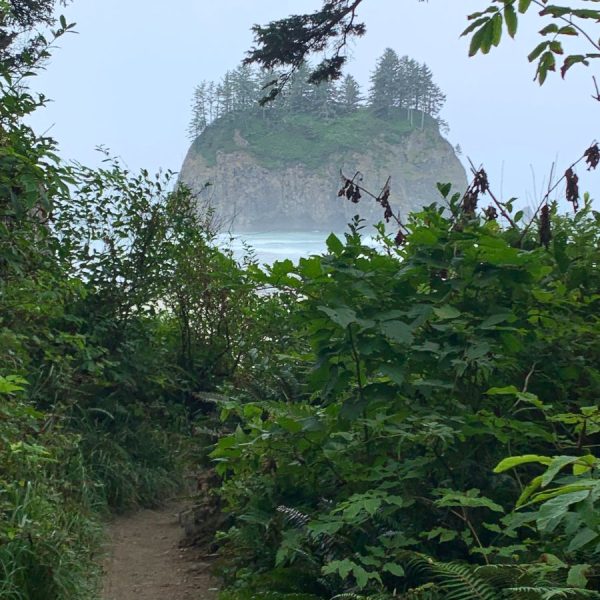
- Second Beach: If you choose not to camp on Shi Shi Beach, then do it on Second Beach. It’s a MUCH shorter hike (0.8 miles one way) and it also has epic sea stacks all around the beach.
- Third Beach: I ended up not going to Third Beach because I was so tired. It’s a 1.3-mile hike in to see an epic beach with towering sea stacks.
- Ruby Beach: This beach was probably the most epic, rugged of them all, with hardly any hike there. I was really looking forward to visiting it, but I spent too much time at the Hoh Rain Forest. I was ready to go sleep (I’m sure it would have been amazing in the dark), so I skipped it. Ruby Beach is far from the others in this list – visit it after the Hoh Rain Forest.
Stop 6: Hoh Rain Forest
I had misgivings about visiting the Hoh Rain Forest. Why am I going to go see a bunch of trees?
Well, it was one of my favorite stops on my Olympic National Park itinerary and definitely the most surprising one.
The thing is, the main attractions are the trees.
But there’s just something about these old growth forests that is absolutely magical. It’s hard to put into better words and even harder to show in pictures. You just have to be there.
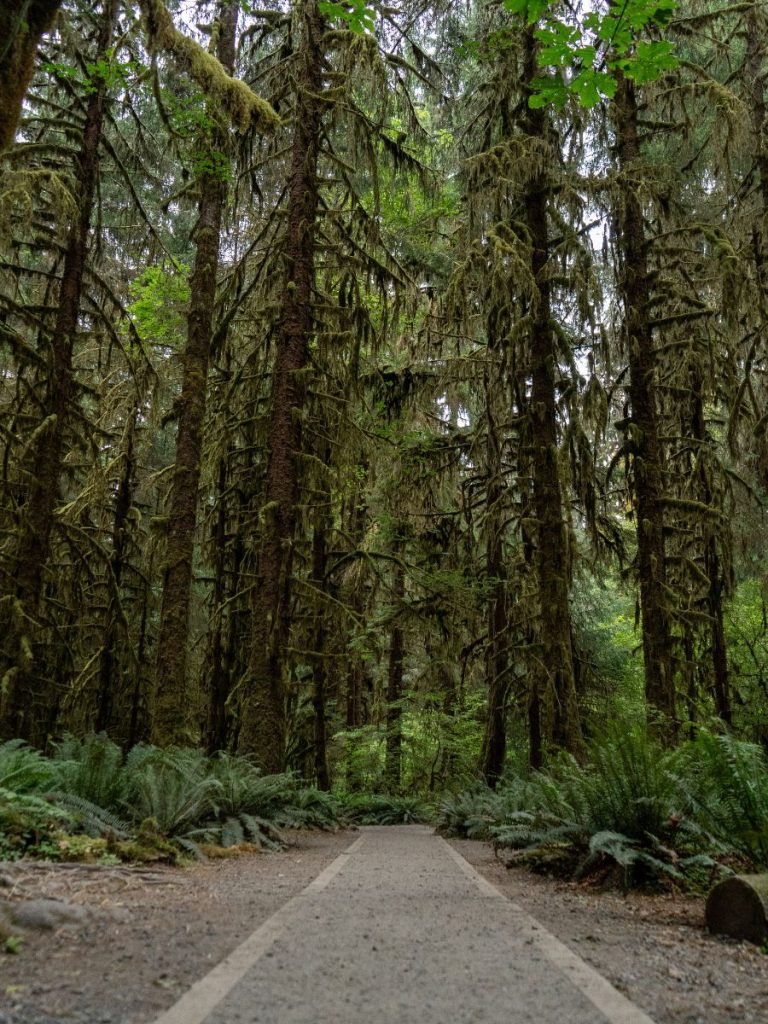
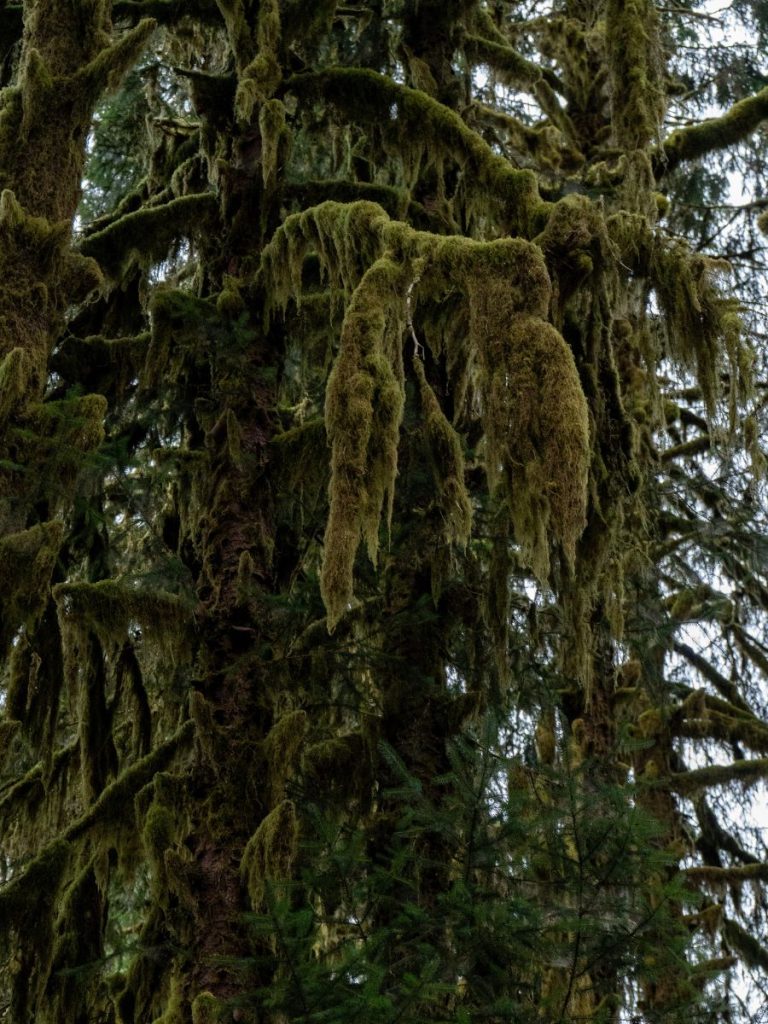
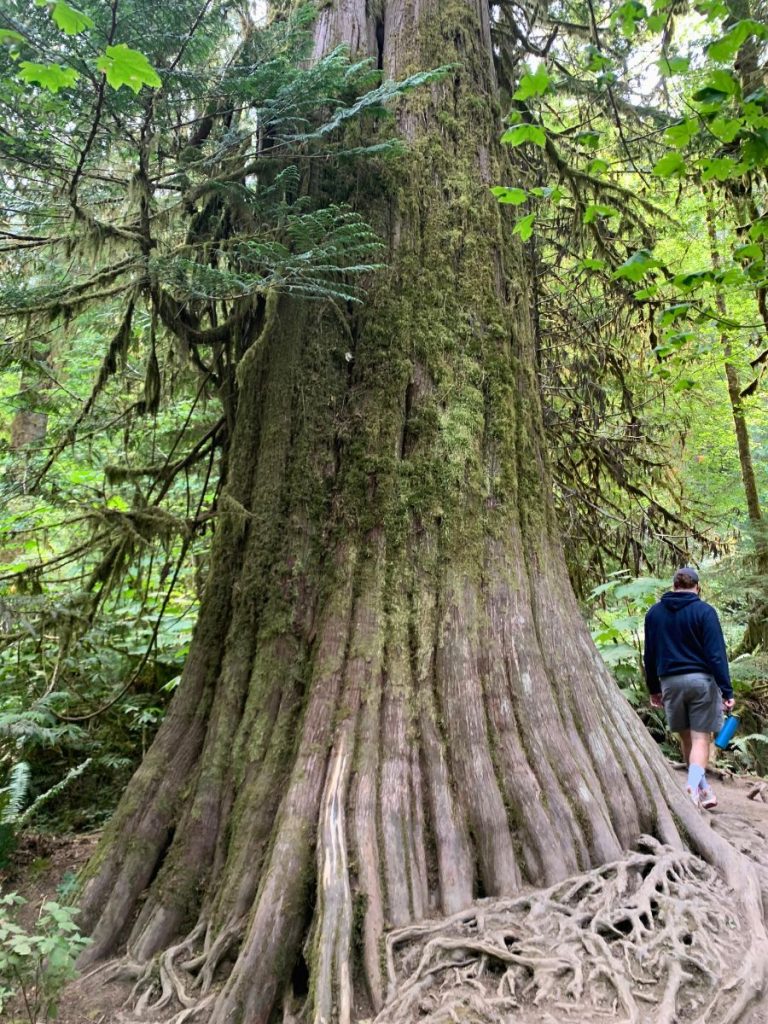
Every inch of ground is covered in life. The trees, whose branches criss-cross every which way, are covered in a radiant green moss, and small creeks trickle over rocks. I loved the two easy hikes I did, which you can make into one slightly longer one:
- Hall of Mosses: If you’re only doing 1 hike in the Hoh Rain Forest, do the Hall of Mosses trail. It takes you through an incredible old growth forest with crazy shapes and textures and giant trees. The trees here were more impressive to me than the Sequoias in California and the forest is just so wild. The trail is a 0.8-mile loop.
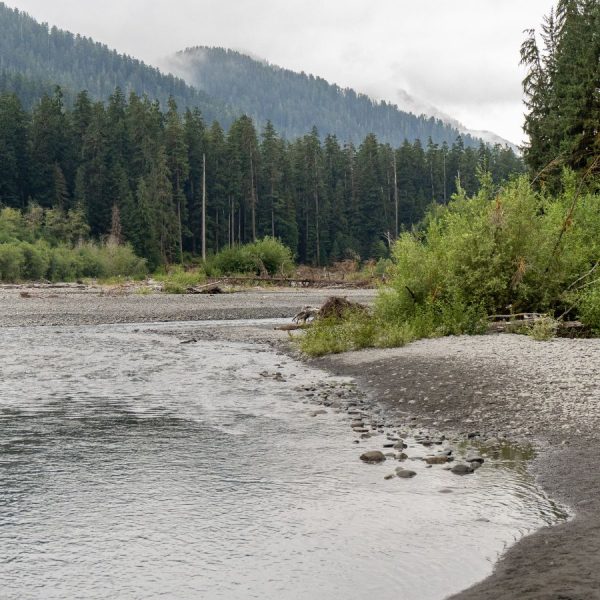
- Spruce Nature Trail: This 1.2-mile loop is also amazing, and it gives you a beautiful mountain view at the Hoh River. This is where you pass a lot of creeks too.
Stop 7: Lake Quinault
Lake Quinault is a big lake in the southwestern part of Olympic National Park. It has a scenic loop through the Quinault Rain Forest and is home to the World’s Largest Sitka Spruce (a tree).
I actually didn’t stop here while I visited Olympic National Park. I just drove right by – which I regretted days later.
Just 3 or 4 days later, I saw the Largest Sitka Spruce in Oregon during my Oregon coast road trip. It was SO impressive, and now I can’t believe I skipped the world’s largest one. I was just a couple miles away from it!
The quickest way back to Seattle (or south to Oregon if the road trip continues) passes by Lake Quinault. So, since you’re going to pass by it, stop at the World’s Largest Sitka Spruce – it’s worth the few extra minutes!
Now, let’s get planning your Olympic National Park itinerary. All these 2, 3 and 4-day Olympic National Park itineraries start in Hurricane Ridge and end in the Hoh Rain Forest because both are places you just can’t skip.
2-day Olympic National Park Itinerary
Give yourself 2 full days for this itinerary! It’s made thinking you arrived the night before, so you can explore non-stop for 2 days straight.
I recommend staying in Port Angeles or the first-come, first-served campground in Heart O’ The Hills that first night.
Day 1: Mountains and Beaches
Morning:
- Visit the Port Angeles Wilderness Information Center (if you’ll be camping on a beach), watch the park film and stamp your national park passport.
- Drive 40 minutes up the mountain to Hurricane Ridge to hike up Hurricane Hill, the Cirque Rim or both.
Daytime:
- Drive 1 hour to the Marymere Falls Trailhead and enjoy this gorgeous forest and waterfall.
- Depending on the time, drive 40 minutes to the Sol Duc Trailhead to visit Sol Duc Falls. If it’s past 12:30, I suggest just driving to Cape Flattery.
- Drive 2 hours from Sol Duc Falls (or 1 hour and 40 minutes from Marymere Falls) to Cape Flattery. Make sure you get your Makah Recreation Pass.
- Enjoy the Cape Flattery trail and epic ocean views.
Afternoon:
You have three options to end day 1 in Olympic National Park:
- Drive 20 minutes to the Shi Shi Beach Trailhead. Hike all the way to Point of Arches and sleep there.
- Drive to Shi Shi Beach, hike to the beach and explore to your heart’s content. Then, drive to Forks and spend the night in town.
- Skip Shi Shi Beach entirely and drive 1.5 hours to Second Beach. Explore the beach and camp there (way less hiking involved) or stay in the Twilight town – La Push.
Day 2: Beaches and a Rain Forest
If you slept at Shi Shi Beach:
- Morning: Explore the beach and take lots of pictures! Then hike back to the car.
- Daytime: Drive 1 hour and 40 minutes to Rialto Beach and hike to Hole in the Wall. Then, visit Second Beach (17 minutes away) and explore the epic seastacks.
- Afternoon: Drive 1 hour and 10 minutes to the Hoh Rain Forest and hike the Hall of Mosses and Spruce Nature Trail. Then, drive to Lake Quinault (2 hours) and, if it’s still light out, visit the World’s Largest Sitka Spruce. To split up the drive, stop at Ruby Beach on the way to Lake Quinault.
- Where to stay: book a room at the Hoh Valley Cabins or at the Lake Quinault Lodge. If you’re camping, stay at Kalaloch Campground or South Beach (I car camped for free on a random forest road marked on the map).
- The next morning, drive to Seattle (3 hours and 15 minutes) and go back home.
If you didn’t sleep on Shi Shi Beach:
- Morning: Drive a few minutes to Rialto Beach and hike to Hole in the Wall. Then, visit Second Beach (17 minutes away) and explore the epic seastacks.
- Daytime: Drive 1 hour and 10 minutes to the Hoh Rain Forest and hike the Hall of Mosses and Spruce Nature Trail.
- Afternoon: Drive to Lake Quinault, visit the World’s Largest Sitka Spruce and do the Quinault Rain Forest Loop Drive. Stop at Ruby Beach on the way.
- Where to stay: book a room at the Lake Quinault Lodge or camp at Kalaloch Campground or South Beach (I car camped for free where I marked it on the map). Or do the 3 hour drive back to Seattle!
3-day Olympic National Park Itinerary
This is exactly the itinerary I did, but I’ll include some recommendations to make it even better (in other words, skip some places that weren’t worth it).
Day 1: Into the Alpine (Hurricane Ridge)
- Drive 2 hours and 40 minutes from Seattle to the Visitor Center in Port Angeles.
- Get information from the Wilderness Information Center (if you’ll be camping on a beach), watch the park film and stamp your national park passport.
- Drive 15 minutes to Heart O’ The Hills Campground (unless you’re staying at a hotel in Port Angeles).
- Drive another 20 minutes up the mountain to Hurricane Ridge and hike up Hurricane Hill, the Cirque Rim or both.
- Head back to your campsite or hotel and get some good rest.
I didn’t include times for day 1 because it’s a pretty laid-back day. I left Seattle at noon and finished the itinerary by 8 p.m. easily, but you could start earlier!
Day 2: The Northwesternmost Point of the USA
Morning:
You have two great options for the morning of day 2:
- Wake up early and hike up to Lake Angeles (the trailhead is 2 minutes from the campground). It’s what I did, but I think option 2 is much better and way more fun.
- Wake up early and drive 40 minutes to the Marymere Falls Trailhead. Hike to Marymere Falls and, on the way back, do the tough 4-mile hike (roundtrip) with 2,000 feet of elevation gain to Mount Storm King. Fun scrambles with ropes help get you to a gorgeous view of Lake Crescent. Definitely have AllTrails on your phone for this one!
Daytime:
- If you hiked to Lake Angeles: drive 40 minutes to Marymere Falls and explore the forest.
- Skip Sol Duc Falls if it’s past 12:30. I skipped it, and it felt like a load off my shoulders. Plus, I got to enjoy even better places for more time.
- Drive 1 hour and 40 minutes from Marymere Falls to Cape Flattery. Make sure you get your Makah Recreation Pass to enjoy the trail and beautiful views.
Afternoon:
- Drive 20 minutes to the Shi Shi Beach Trailhead and hike all the way to Point of Arches.
- Set up camp and sleep on Shi Shi Beach.
- If you aren’t sleeping on Shi Shi Beach, explore the beach for a while and then drive to a hotel. For less driving, stay near Neah Bay. If you don’t mind driving more, book a hotel near Forks.
Day 3: The Rugged Pacific Coast and Hoh Rain Forest
If you slept at Shi Shi Beach:
- Morning: Wake up at the glorious Point of Arches and enjoy nature. Then hike back to the car.
- Daytime: Drive 1 hour and 40 minutes to Rialto Beach and hike to Hole in the Wall. Then, visit Second Beach (17 minutes away) and explore the epic seastacks. Skip Third Beach – you’ll be too tired (I sure was).
- Afternoon: Drive 1 hour and 10 minutes to the Hoh Rain Forest and hike the Hall of Mosses and Spruce Nature Trail. Then, drive to your lodging for the night (I skipped Ruby Beach and Lake Quinault because it just got too late)!
- Where to stay: book a room at the Hoh Valley Cabins (less driving) or at the Lake Quinault Lodge (more driving). If you’re camping, stay at Kalaloch Campground or South Beach (I car camped for free where I marked it on the map).
- The next morning, drive to Seattle (3 hours and 15 minutes) and back home.
If you didn’t sleep on Shi Shi Beach:
- Morning: Drive to Rialto Beach and hike to Hole in the Wall. Then, visit Second Beach (17 minutes away) and explore the epic seastacks. Consider skipping Third Beach (2 minutes away) to have more time for Ruby Beach later.
- Daytime: Drive 1 hour and 10 minutes to the Hoh Rain Forest and hike the Hall of Mosses and Spruce Nature Trail.
- Afternoon: Drive to Lake Quinault, visit the World’s Largest Sitka Spruce and do the Quinault Rain Forest Loop Drive. Stop at Ruby Beach on the way there.
- Where to stay: book a room at the Lake Quinault Lodge or camp at Kalaloch Campground or South Beach (I car camped for free). Otherwise, do the 3-hour drive back to Seattle!
From here, I continued driving south for my road trip around Oregon!
4-day Olympic National Park Itinerary
Day 1: The Alpine
- Drive 2 hours and 40 minutes from Seattle to the Olympic National Park Visitor Center in Port Angeles.
- Go to the Wilderness Information Center (if you’ll be camping on a beach) and get your permit, watch the park film and stamp your national park passport.
- Drive 15 minutes to Heart O’ The Hills Campground and get a sit (skip this if you’re staying at a hotel in Port Angeles).
- Drive 20 minutes to Hurricane Ridge and hike up Hurricane Hill and the Cirque Rim.
- Head back to your campsite or to Port Angeles and get some good rest.
This is a laid-back day, so I didn’t include times. I left Seattle at noon and did everything I wanted at Hurricane Ridge in the evening, but you could do it all earlier in the day!
Day 2: The Northern Olympic Peninsula
Morning:
- Wake up early and drive 40 minutes to the Marymere Falls Trailhead.
- Hike to Marymere Falls and, on the way back, do the tough 4-mile hike (roundtrip) with 2,000 feet of elevation gain to Mount Storm King. Fun scrambles with ropes help get you to a gorgeous view of Lake Crescent. Use AllTrails to stay on trail!
Daytime:
- Drive 40 minutes to Sol Duc Trailhead and hike 1.8 miles to Sol Duc Falls.
- Drive 1 hour and 45 minutes from Sol Duc Falls to Cape Flattery. Make sure you get your Makah Recreation Pass.
Afternoon:
- If you’re sleeping on Shi Shi beach, drive 20 minutes to the Shi Shi Beach trailhead. Set up camp as soon as you reach the beach.
- If you won’t be sleeping on Shi Shi beach, stay at a hotel near Neah Bay and rest up to visit Shi Shi Beach tomorrow.
Day 3: Washington Coast Beaches
Morning/Daytime:
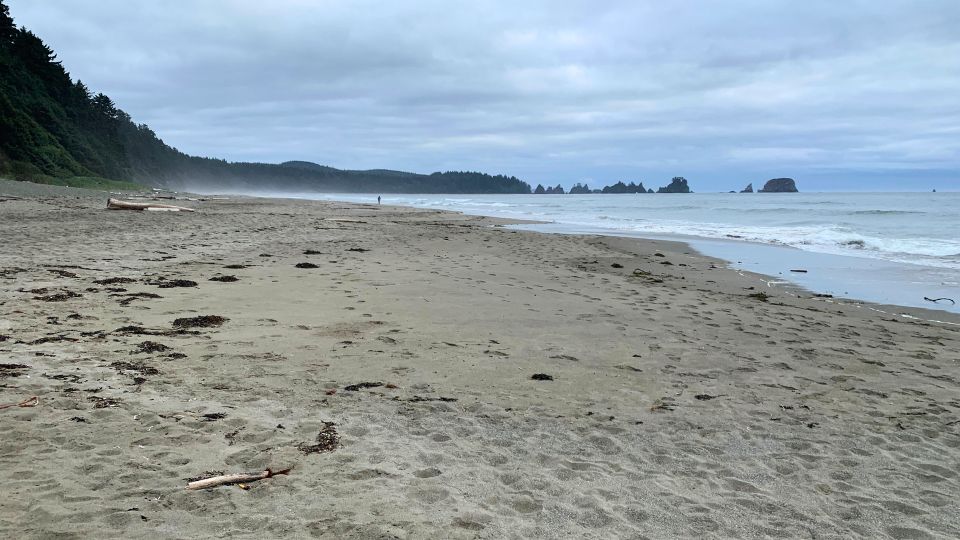
- Hike to Point of Arches, the far side of Shi Shi Beach. Try to time it so that you’re there at low tide, or 2-3 hours before or after low tide, to get the full experience.
- Explore to your heart’s content and then hike back to your car.

Afternoon
- Drive 1 hour and 45 minutes to Rialto Beach.
- Hike to Hole in the Wall and enjoy the eerie sea stacks and gorgeous rock beach.
- Drive 17 minutes to Second Beach and do the short hike to see epic sea stacks.
- If you want to hike more, drive 2 minutes to Third Beach and hike in.
- Enjoy another sunset on the beach.
Where to Stay for Day 3
Here are three options for where to stay on Day 3 of this 4-day Olympic National Park itinerary:
- Spend a night on Second Beach.
- Mora Campground, which is just 13 minutes from Second Beach.
- In the Forks area, which includes La Push, Forks and the Hoh Valley, depending on how close you want to be to tomorrow’s first destination (the Hoh Rain Forest).

Day 4: Rain Forest Galore
Morning:
- Sleep in for this laid-back day.
- Drive to the Hoh Rain Forest Visitor Center (50 minutes from Forks).
- Hike the Hall of Mosses and Spruce Nature Trail for a total of 2 miles through the most amazing forest you’ve ever seen.
Daytime/Afternoon:
- Drive 50 minutes to Ruby Beach. Hike around and enjoy the epic sea stacks. Stay late and enjoy an amazing sunset or…
- Drive another hour to the World’s Largest Sitka Spruce at Lake Quinault and do the Quinault Rain Forest Loop Drive.
- To end the day, spend the night at the Lake Quinault Lodge or start driving back to Seattle and stay at a cool hotel along the way.
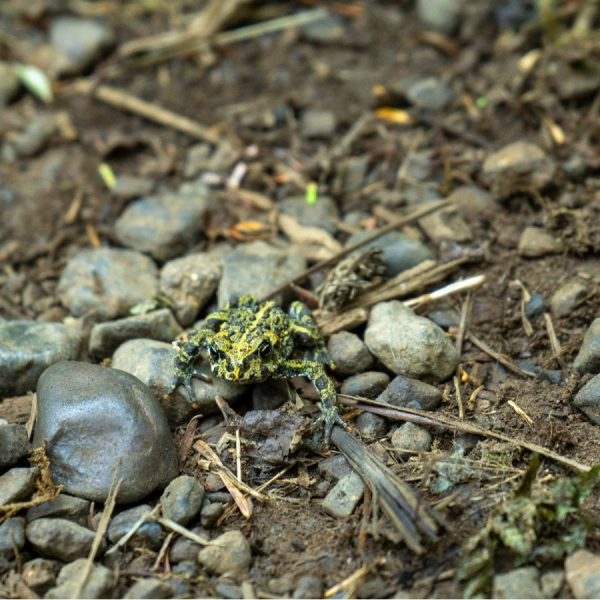
Just like that, you will have spent an incredible 2, 3 or 4 days in Olympic National Park!
If you’ve got the road trip bug now, check out my guide to the most amazing road trip through Washington State.
And if you like detailed, honest itineraries like this one, subscribe to my 2x-a-month newsletter for lots more itineraries and adventures to come!